4 min to read
Building a Better Ratcheting Bit Driver
About
This is a review of the current options for a high-quality ratcheting bit holder. We are mainly concerned with two parts: the ratchet mechanism (high tooth engagement, low play, and manageable backdrag) and the fit of the bit holder.
None of the current options gets both parts right. There are several compelling ratcheting drivers, but none match the bit retention of the Wiha CentroFix. Wiha, meanwhile, does not offer the CentroFix in a ratcheting handle.
We explore the available options and investigate how we can assemble a driver that combines a high-quality ratchet with the CentroFix bit holder.
The Grail
A ratcheting bit driver with the following characteristics:
- near-zero play in the ratchet mechanism (rotationally and lock-up)
- low or ergonomically mitigated backdrag
- minimal axial and radial play in bit retention
This configuration does not currently exist as a single commercial product but can potentially be achieved by combining selected components from existing tools.
Wiha CentroFix
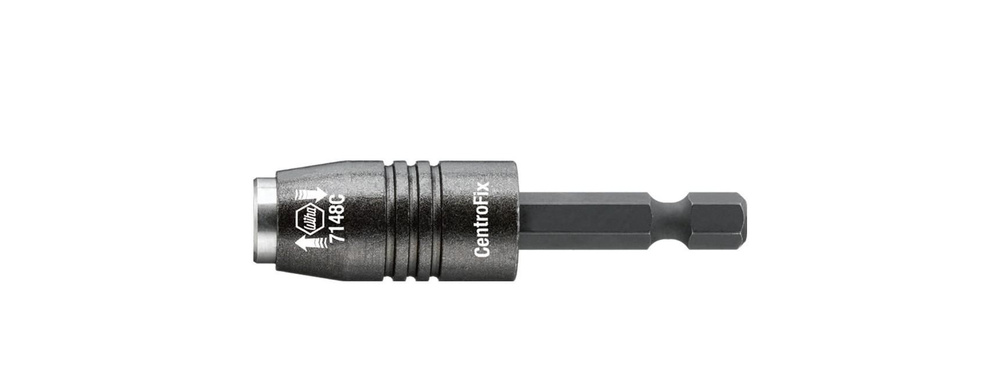
BZEUG demonstrates that CentroFix retention is based on four ball bearings engaging the flats of the bit shank. The result is minimal play, to the point that it effectively behaves more like a fixed-blade driver than a conventional magnetic bit holder. CentroFix is compatible with C6.3 25 mm bits, E6.3 power-tool-standard bits, and JIS 13 mm anvil bits, which are larger than the standard 9 mm anvil format. It is “available” in two practical forms: as a standalone bit holder, which can exhibit eccentricity and is not recommended for high-RPM use, or by extracting the CentroFix mechanism from integrated Wiha CentroFix drivers.
Driver Candidates
The goal is to permanently install a CentroFix bit holder into a suitable driver handle.
PB Swiss
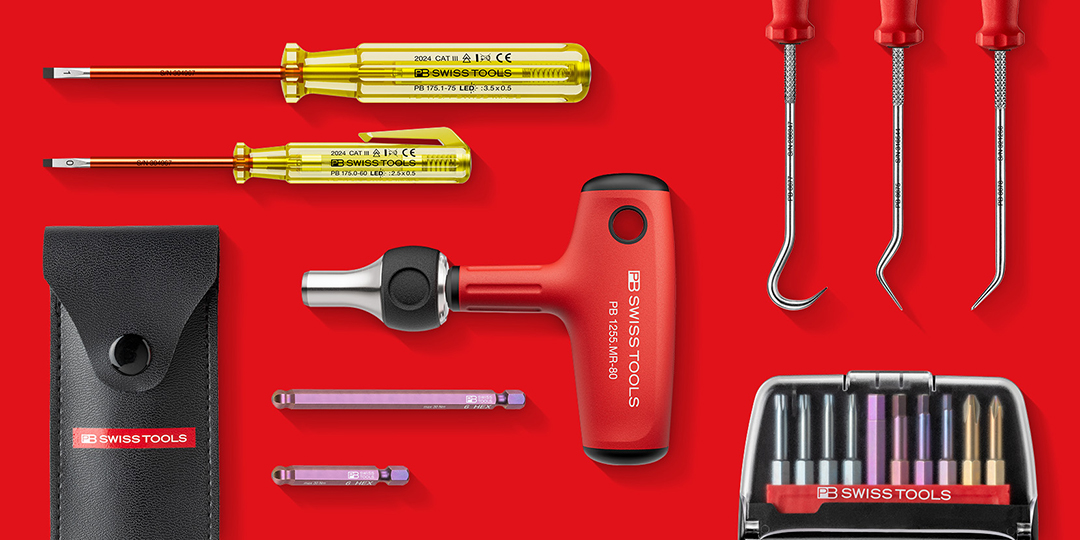
PB Swiss makes a very nice ratcheting screwdriver, with possibly the best ratchet mechanism here in terms of lock-up and play. The main tradeoff is higher back drag.
The handles are available in SwissGrip, an elastomer-over-polypropylene design, as well as acetate. Bit are held by standard magnetic retention: the magnets are strong, but because the bits are not mechanically locked into place.
It does not seem possible to separate the bit holder from the ratchet mechanism.
Anex
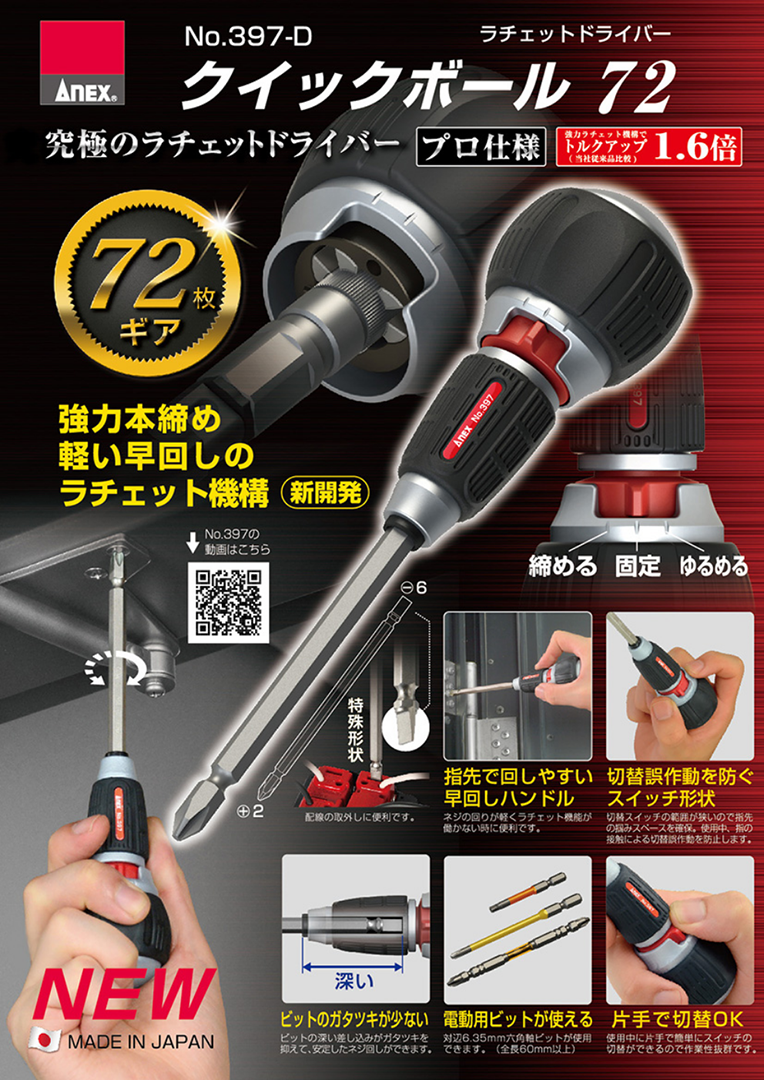
The Anex 397 ratcheting mechanism seems comparable to PB Swiss in play and lock-up, but has a lighter action.
This is a compelling handle because it has a Japanese ball-style grip. A ball-style handle rests in the palm of the hand, which is ergonomically different from a standard driver. It also helps reduce the practical impact of back drag during use.
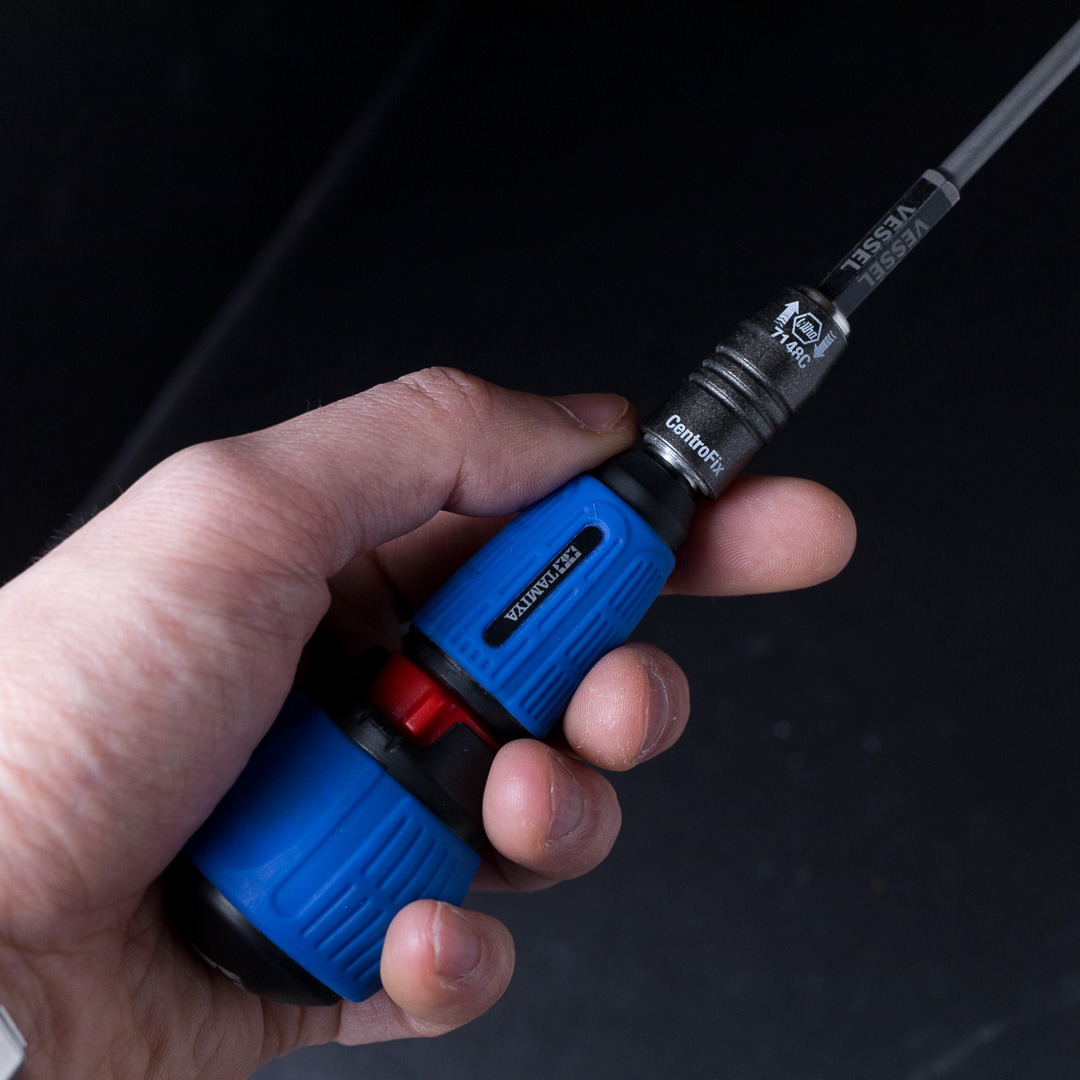
There is also a lesser-known rebranded Anex: the Tamiya 74152. At first, I thought the Tamiya-branded one appeared to have more glass-fiber content in the handle, but that wasn’t the case. It’s just a blue-colored Anex 397.
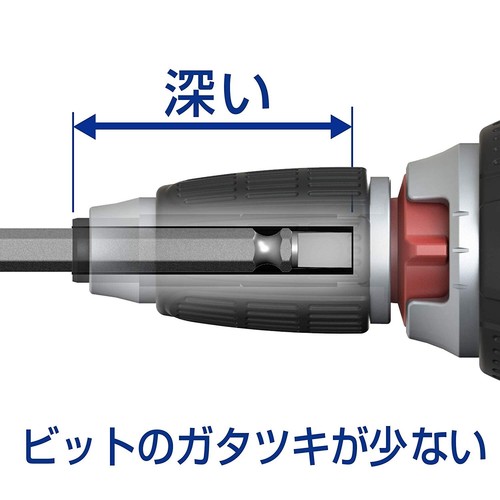
Uniquely, the Anex/Tamiya handles are excellent candidates for accepting the CentroFix bit holder. These driver handles are designed around Japanese blade-style driver bits. The bit holder is 45 mm deep, which means standard ISO 1173 C6.3 and E6.3 bits are too short; bits have to be at least 65 mm long to be usable.
That depth, however, means that the Wiha CentroFix can be fully inserted into the handle.
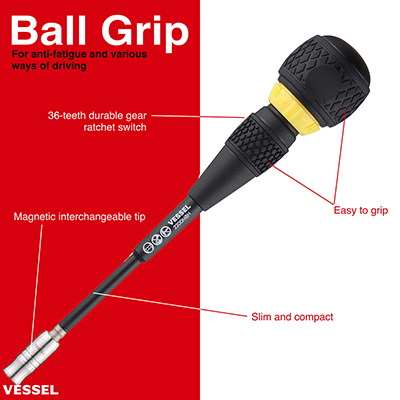
Vessel
In comparison, the Vessel 2200 series has a similar form factor and can be converted into a stubby, which gives it a useful bit of flexibility.
The key differences between the Vessel and the Anex are:
- The Anex has more ratchet teeth
- The Vessel’s ratchet direction switch is “backwards” and gets in the way
- The Vessel’s front end cannot be detached, so the bit holder cannot be changed
Others
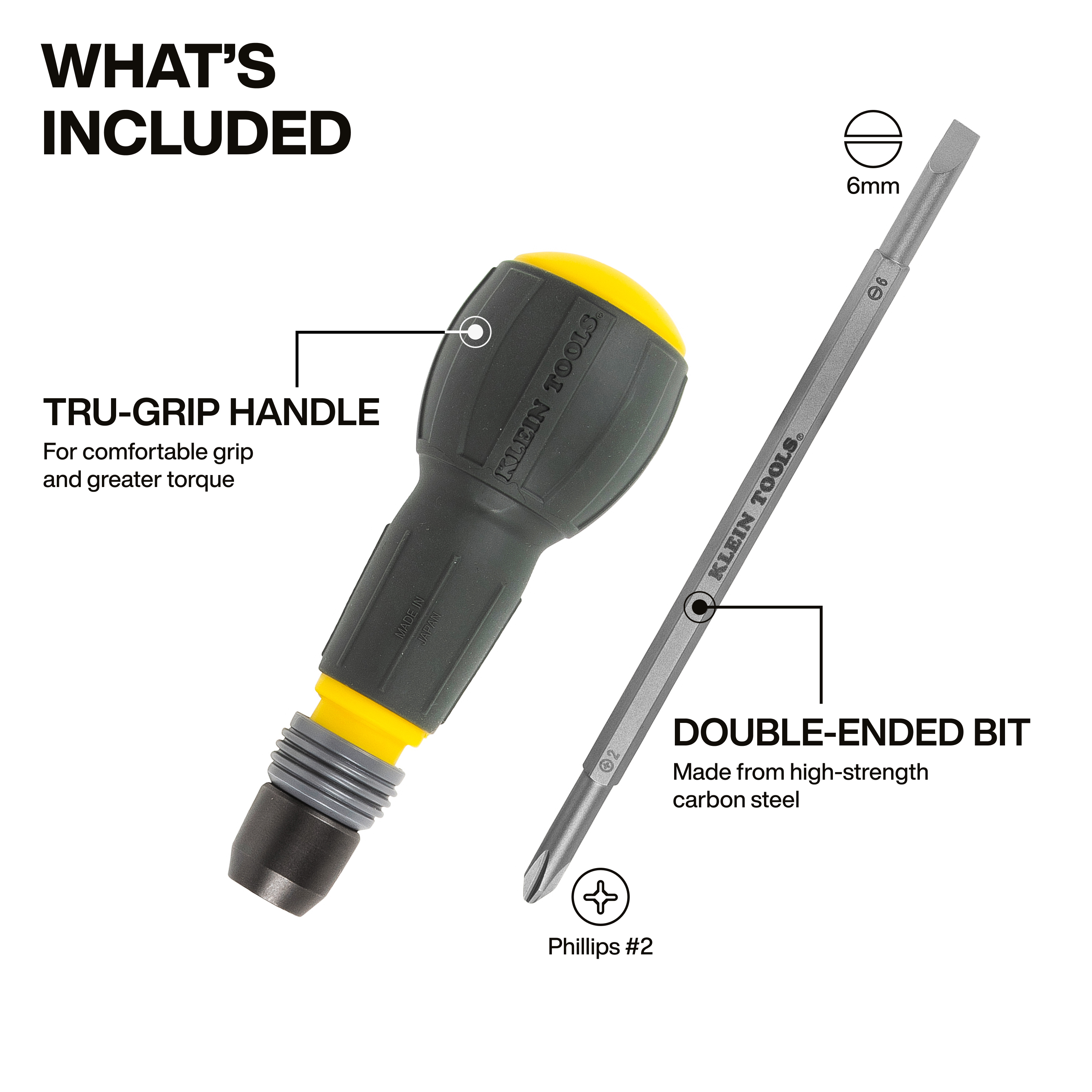
Klein 32960A Fastbit Tru-Grip
Introduced in Q1/Q2 2026. Probably a solid CentroFix candidate, and maybe the closest domestic analogue to the Anex 397.
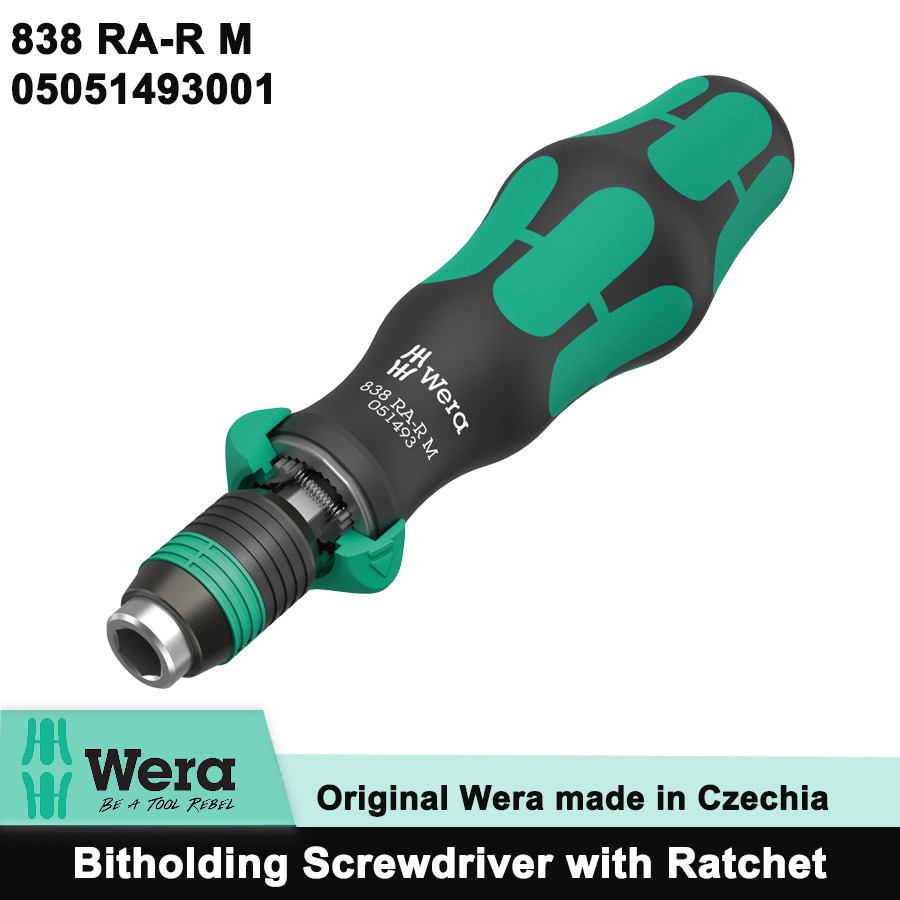
Wera 328 RA
Incredible ratchet mechanism, but unlikely to be able to change the bit holder.
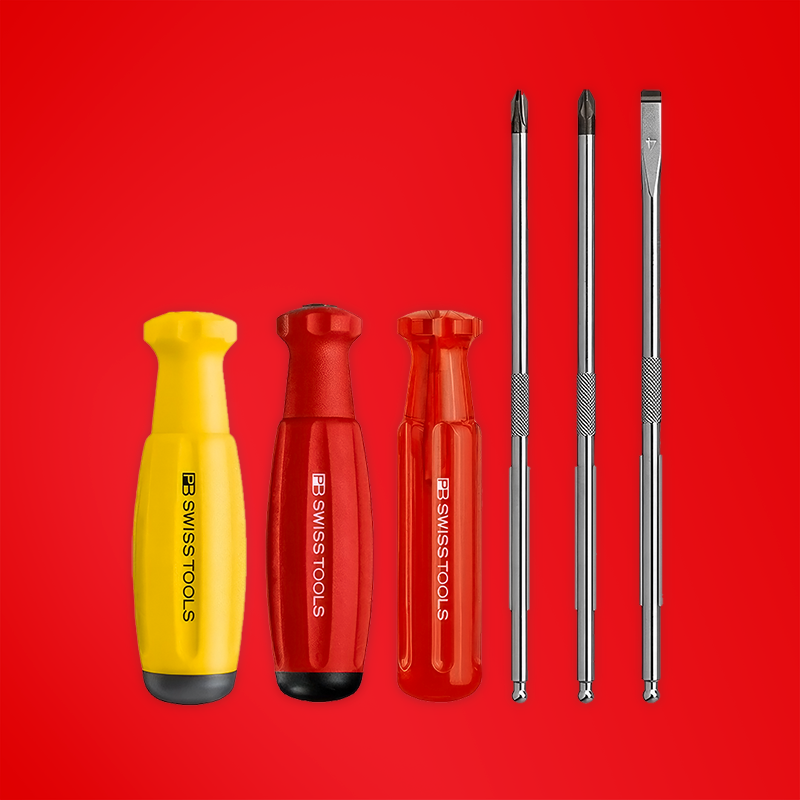
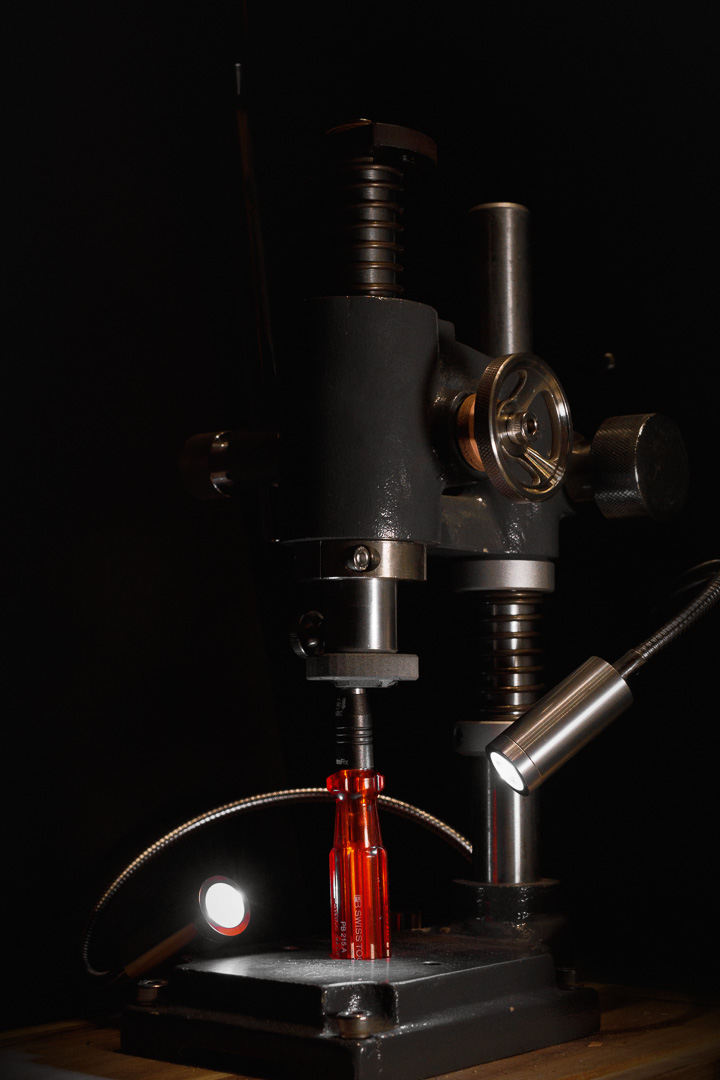
PB 215 Interference Fit
PB Swiss 215 series handles fit proprietary PB Swiss blades which measure 6.2mm in diameter aside from the positioning wings. On the other hand, a 1/4” hex shank bit measures 6.35mm across the flat faces. The 0.15mm oversize results in a press-fit.
Insertion method:
- Chamfer the entry with a countersink bit to improve alignment
- Warm the handle (50-60 C) to increase compliance.
- Insert the shank with a press to ensure axial alignment.
CentroFix Mounted on Anex 397 / Tamiya 74152
Turns out, the tolerance on the Anex 397 / Tamiya 74152 is super tight. The CentroFix inserts fully into the handle, and there is zero play.
No modifications are necessary.